
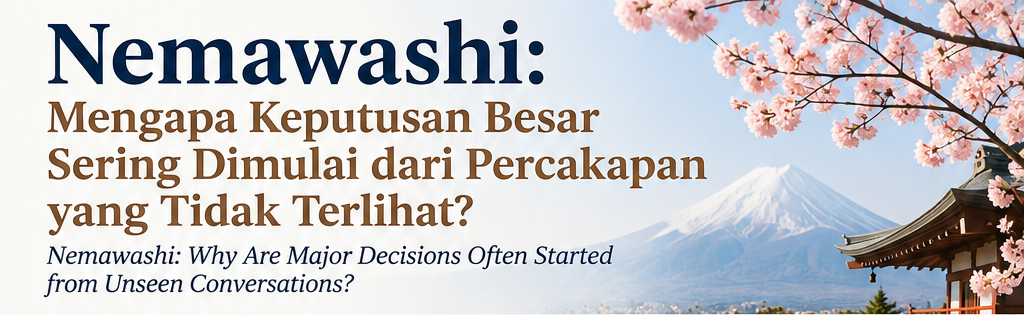
Bilingual article
Nemawashi is one of the most interesting concepts in Japanese organizational communication because it shows that the quality of a decision is often shaped before the decision ever reaches the formal agenda. This article explores its origins, functions, benefits, limitations, and relevance to cross-cultural communication.
Introduction: Visible Decisions and Invisible Processes
In many organizations, major decisions can appear to be born in the meeting room. A proposal is presented, leaders ask several questions, and a decision is announced. In Japanese workplace culture, however, that formal moment is often only the final stage of a much longer process. Before the meeting begins, the relevant people may already have spoken with one another, exchanged views, identified concerns, and adjusted the idea so that it can be accepted collectively. This process is known as nemawashi.
What Is Nemawashi?
Literally, nemawashi comes from agriculture and horticulture. The word ne means “root,” while mawasu or mawashi relates to going around or preparing something. When a tree is transplanted, the soil and roots are prepared in advance so that the plant can be moved without severe damage. This analogy later became useful in organizational life: before a major change is “transplanted” into an official decision, the surrounding environment is prepared first.

AI illustration: building understanding before a formal decision.
More Than Behind-the-Scenes Lobbying
Nemawashi is sometimes misunderstood as secret lobbying designed to secure approval. In a healthy form, however, its purpose is not to manipulate people into saying “yes.” It is closer to early consultation: explaining the context, asking for input, listening to objections, and understanding how a decision may affect others. Because it happens before the formal forum, people have a safer space to express doubts without feeling that they must debate publicly.
Why Does Japanese Culture Value This Process?
In many Japanese contexts, long-term relationships, group harmony, and the ability to work together are highly valued. A technically correct decision may still be difficult to implement if the people affected feel that they were not heard. Nemawashi helps reduce surprises. By the time an idea reaches a formal meeting, participants often already understand its background, know the reasons for the change, and have had an opportunity to share their views beforehand.

AI illustration: building understanding before a formal decision.
How Is Nemawashi Practiced?
Nemawashi does not have a single fixed format. It may take the form of a brief conversation after a meeting, a one-on-one discussion, lunch together, a short call, or a small meeting with people who hold important knowledge. The person introducing a proposal usually does not immediately ask for a final decision. Instead, the idea is tested first: which parts make sense, what risks remain unseen, who else should be involved, and what adjustments would make implementation more realistic.
Why Can Formal Meetings Look Surprisingly Calm?
For people accustomed to meeting cultures in which the formal forum is the main place for debate, some Japanese meetings can feel unusually calm, or even as if the decision had already been made. In some situations, much of the substantive discussion has indeed happened beforehand. This does not mean the meeting is unimportant. The formal meeting confirms shared understanding, records the decision, and ensures that everyone moves in the same direction. In other words, informal discussion prepares the soil; the formal meeting marks the moment of planting.
Benefits of Nemawashi for Organizations
The main advantage of nemawashi is the quality of implementation. Input from different parties can reveal problems that the proposal owner did not see. Resistance may also decrease because people understand the reasons behind the change and feel that they had a chance to contribute. In addition, the process can accelerate execution after the official decision is made. More time is invested at the beginning, but major conflict and revision after the decision may be reduced.

AI illustration: building understanding before a formal decision.
Challenges and Limitations
Nemawashi is not a perfect method for every situation. If it continues for too long, consultation can slow down decisions that are genuinely urgent. If only a select group is involved, it can also become an exclusive process that leaves others feeling excluded. For that reason, clarity about the purpose, timeline, and relevant stakeholders remains important. Nemawashi should be used to build understanding, not to avoid accountability or hide decisions.
What Can Indonesian Organizations Learn?
Nemawashi does not have to be copied exactly in order to be useful. Indonesian organizations can adopt its core principle: do not wait for the big meeting to hear important objections for the first time. Before proposing a change in systems, policies, schedules, or strategy, leaders can speak first with the people who will implement the decision. Simple questions such as “What risk am I missing?”, “Which part will be hardest to implement?”, or “Who else should we speak with?” can lead to more mature decisions.
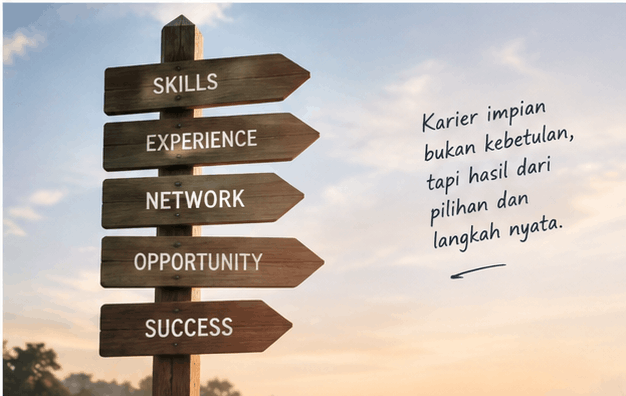
AI illustration: building understanding before a formal decision.
Nemawashi in Cross-Cultural Communication
Understanding nemawashi is also useful when working with Japanese companies or colleagues. When a response to a proposal seems slow, it does not always mean rejection. The relevant parties may be consulting internally and confirming support across several functions. Conversely, sending a major proposal and requesting an immediate decision may feel too abrupt to an organization accustomed to building consensus first. Providing context, time for consultation, and opportunities to ask questions often makes communication more effective.
Conclusion: Major Decisions Begin with Listening
Nemawashi reminds us that decision-making is not only about selecting the best option on paper. It is also about the people who must understand, accept, and carry out that decision. The unseen conversations—listening to concerns, asking for advice, explaining the reasons, and adjusting the plan—often become the foundation of a decision that looks simple when it is finally announced. In an increasingly collaborative workplace, the most important lesson of nemawashi may not be how to “get approval,” but how to prepare change with respect, patience, and attention to relationships.
Note:The photos and illustrations in this document were AI-generated to support visualization of the concept. Related Posts
Learn from Google, Work for the World
Learn from Google, Work for the World How Google Career Certificates Open Unlimited Global Career Doors? The Workplace Has Changed—Has the Way You Learn Changed Too? Learn from Google Work for the World. A…