
Preparation Before Working in Japan
Language, Skills, and Mindset

AI Illustration
Preparing Yourself for Opportunities in Japan
Japan has long been one of the destinations for Indonesians who want to develop their careers, gain international work experience, and improve their professional skills. Various industries in Japan offer opportunities for foreign workers, including those from Indonesia. These opportunities can be found in manufacturing, elderly care (kaigo), construction, hospitality, agriculture, food processing, and other sectors. However, working in Japan is not simply about securing a job or moving abroad. Prospective workers need comprehensive preparation so they can fulfil their work responsibilities, adapt to a new environment, and build a good life in Japan.
Thorough preparation should begin well before departure. Several important aspects need attention: Japanese language proficiency, technical skills relevant to the chosen occupation, an understanding of Japanese culture and work etiquette, mental readiness, and complete administrative documents. These aspects are interconnected. Language ability helps workers understand instructions, technical skills support job performance, while the right mindset and cultural awareness help maintain good relationships with colleagues. By preparing step by step, prospective workers can approach the selection process and working life in Japan with greater confidence.
1. Understanding Job Opportunities and Occupational Fields

AI Illustration
The first step is to understand the type of work you want to pursue. Each field has its own characteristics, responsibilities, work environment, and requirements. Manufacturing jobs, for example, may involve operating machinery, assembling components, quality inspection, or other production processes. Kaigo, on the other hand, focuses on supporting and caring for older people, requiring compassion, patience, good communication, and attention to safety. Hospitality and food service roles also require customer service skills, teamwork, and high hygiene standards.
Prospective workers should obtain reliable information about daily duties, working hours, shift systems, placement locations, benefits, contract terms, and workers’ rights and responsibilities. Salary should not be the only consideration. Living expenses, accommodation, transportation, applicable deductions, and possible overtime should also be understood so that workers can realistically estimate their finances. Make sure that the recruitment and placement process is explained transparently by the relevant parties.
2. Mastering Japanese for Daily and Workplace Communication
AI Illustration
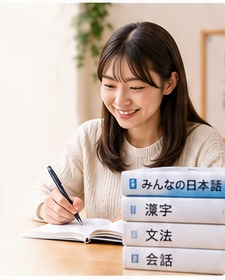
Japanese language proficiency is one of the most important foundations for working and living in Japan. Language is needed not only during interviews, but also when receiving instructions, reporting tasks, asking supervisors questions, communicating with colleagues, and resolving problems. Good language comprehension can help reduce misunderstandings, especially in jobs involving safety, equipment, operating procedures, or services to other people.
Learning should cover the four language skills: listening, speaking, reading, and writing. Prospective workers should become accustomed to listening to conversations at a natural pace, understanding commonly used workplace vocabulary, and practising how to communicate information clearly and concisely. It is also important to learn polite expressions, such as aisatsu (greetings), asking for assistance, requesting permission, confirming instructions, and giving reports. In Japanese workplaces, polite and appropriate communication reflects professionalism.
Japanese proficiency certificates, such as the JLPT or JFT-Basic, may serve as evidence of language ability depending on the requirements of the intended programme or employer. However, preparation should not focus solely on passing an examination. A learner may understand grammar and vocabulary from textbooks but still need practical speaking practice to use the language in real situations. Classroom learning should therefore be complemented by interview simulations, workplace role-plays, listening exercises, and everyday conversation practice.
3. Building Technical Skills and Job Knowledge
AI Illustration
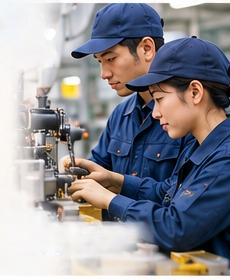
In addition to language, technical skills or hard skills are essential for workplace readiness. Every occupation has standards, tools, procedures, and targets that workers need to understand. Prospective manufacturing workers should become familiar with basic workplace safety, equipment use, accuracy in production processes, and quality checks. Those preparing for kaigo should understand basic care principles, hygiene, assistance with daily activities, and ways to protect the safety and comfort of service users. Relevant skills help workers perform their duties accurately and responsibly.
Practical training provides an opportunity to become familiar with work situations before entering an actual workplace. Through hands-on practice, participants can learn to follow instructions, use equipment according to procedures, maintain workplace cleanliness, and work safely. Practical experience also helps participants identify areas that need improvement. Where available, prospective workers should take training relevant to their intended occupation and use instructor feedback to improve their abilities consistently.
Technical ability should also be supported by careful working habits. Reading instructions before starting a task, checking completed work, using personal protective equipment when required, and promptly reporting unsafe conditions are important examples of responsible behaviour. Do not hesitate to ask questions if a procedure is unclear. At work, confirming instructions is far better than making assumptions that could lead to mistakes.
4. Developing the Right Mindset and Work Ethics
AI Illustration
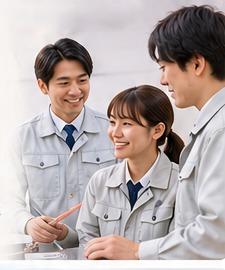
Working in another country means entering an environment with customs and standards that may differ from what you are used to. In Japan, punctuality, responsibility, discipline, cleanliness, and teamwork are often important parts of working life. Arriving on time, preparing equipment before starting, following company rules, and completing assigned duties responsibly are habits that should be developed during training.
Having the right mindset does not mean being able to do everything perfectly without mistakes. A person who is ready to learn should remain open to guidance and evaluation. When a mistake occurs, it is important to acknowledge it, understand its cause, accept feedback, and make an effort not to repeat it. Managing emotions, maintaining a constructive attitude under pressure, and communicating problems appropriately are also part of professionalism.
Working life in Japan may require adapting to new work rhythms, rules, and communication styles. Prospective workers should therefore develop independence, resilience, and healthy routines. Getting enough rest, managing finances, staying connected with family, and finding healthy ways to cope with fatigue or homesickness can support the adjustment process. Asking for help when facing difficulties is not a sign of weakness; it is a sensible way to look after yourself and address problems.
5. Understanding Japanese Culture, Rules, and Daily Life

AI Illustration
Preparation for working in Japan goes beyond the skills required at the workplace. Prospective workers should also understand everyday life in Japanese society. Simple practices such as sorting waste according to local categories, keeping noise down on public transportation, following accommodation rules, queuing, and respecting other people’s personal space are social habits worth learning. Understanding these expectations can help workers interact more comfortably with their surroundings.
Communication culture also deserves attention. In many situations, Japanese people use polite expressions and consider context when sharing opinions or making requests. Greeting others, expressing gratitude, apologising when appropriate, and confirming information can help build positive relationships. Nevertheless, customs may vary between companies and regions. It is therefore important to observe, learn, and ask politely when you encounter rules or practices you do not understand.
Prospective workers should also learn about estimated living costs and basic needs in their placement city. Information about transportation, accommodation, food, healthcare, internet access, and public facilities will support the adjustment process. Learning how to use public transportation, read basic signs, and identify emergency contacts and people who can provide assistance will make daily life more manageable.
6.Preparing Documents and Administrative Requirements Carefully
AI Illustration
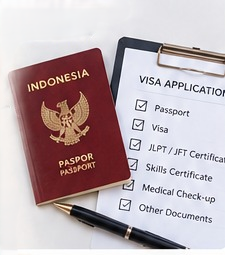
Documents are an important part of the process of working in Japan. Requirements may vary depending on the occupation, programme, residence status, employer, and applicable regulations. In general, prospective workers may need to prepare a passport, identity documents, educational certificates, language proficiency certificates, skills certificates, medical examination results, and other documents requested by the relevant parties. All documents should be prepared in the required format and within the specified deadlines.
Make sure that names, dates of birth, document numbers, and other information are consistent. Keep digital and physical copies in a safe place, and check document validity before use. Do not hand over original documents or make payments without understanding their purpose, procedure, and supporting records. If anything is unclear, request an explanation from the training institution, employer, or relevant authorised body. Careful administration can help prevent delays and complications during the placement process.
7. Creating a Practical and Measurable Preparation Plan
AI Illustration
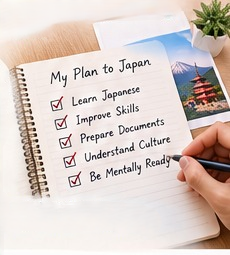
To make preparation more structured, prospective workers can create a learning and personal development plan. Start by assessing your current abilities and then set realistic goals. For example, establish a daily language-learning schedule, review occupational vocabulary, practise conversations, attend technical training, and conduct interview simulations. Progress should be reviewed regularly so that you know which areas you have mastered and which still need improvement.
Preparation is more effective when carried out consistently rather than through intensive study only shortly before departure. Small habits such as learning new vocabulary, listening to Japanese materials, reading about the occupation, practising punctuality, and maintaining physical fitness can make a positive difference when sustained over time. Support from instructors, family, fellow learners, and training institutions can also help maintain motivation.
Conclusion: Today’s Preparation for a Better Future

AI Illustration
Working in Japan can be a valuable opportunity to develop a career, improve skills, and gain new life experiences. However, success is not determined solely by the opportunity to depart or secure a job. Language proficiency, technical skills, mindset, cultural understanding, and complete administrative preparation are essential foundations for working and living well in Japan.
Every prospective worker has their own journey and challenges. There is no need to rush into comparing your progress with someone else’s. Focus on improving your abilities step by step, seeking accurate information, and building positive habits from the beginning. With a well-planned preparation process and a commitment to continuous learning, the opportunity to work in Japan can be approached with greater readiness, confidence, and responsibility.
Short Checklist of Prospective Employees
- Understand the field of work, duties, and requirements.
- Have a target of learning Japanese and practice regularly.
- Develop technical skills according to the field of goals.
- Practice interviews and communication in a work environment.
- Understand Japanese work ethic, safety, and culture.
- Prepare mentally, independently, and financially managed.
- Check the completeness and validity of documents.
- Seek information through trusted sources and parties.
Related Posts
A Generation That Can Access Everything, Yet Struggles to Focus on One Thing
1. Introduction: A World at Our Fingertips, a Fragmented MindIn a single minute, someone can reply to messages, read news from another part of the world, watch short videos, and find answers to questions…
Nemawashi: Why Are Major Decisions Often Started Through Unseen Conversations?
Bilingual articleNemawashi is one of the most interesting concepts in Japanese organizational communication because it shows that the quality of a decision is often shaped before the decision ever reaches the formal agenda. This…
Learn from Google, Work for the World
Learn from Google, Work for the World How Google Career Certificates Open Unlimited Global Career Doors? The Workplace Has Changed—Has the Way You Learn Changed Too? Learn from Google Work for the World. A…